

The newest discipline in foil riding — how it works, who it's for, and the gear we carry.
Parawinging is one of the fastest growing disciplines in foil riding right now. The concept is simple but the feel is completely different from anything else on the water — instead of holding a wing out right in front of you, a parawing flies in front and above you away from your body like a kite, connected to a spreader bar that you hold in your hand.
You don't need to pump it up. You can pack it away once you're up on foil and riding swell. Power delivery is highly tunable. And it opens up more freedom on foil, with a glide and flow to it that is truly freeing.
If you've ever felt like you want more freedom on foil without a bulky thing in front of your face, parawinging solves that problem completely. The power gets you up and then gets out of the way.
It's a genuinely new way to ride, and it's catching on fast with wing foilers, kiteboarders, and windsurfers who want something different.
If you're already a wing foiler, here's a quick breakdown of what changes when you switch to a parawing:
| Wing Foiling | Parawinging | |
|---|---|---|
| How you hold it | Handheld with horizontal handles | Handheld with a vertical control bar |
| Where it flies | In front of you, at arm level | Above your head like a kite and away from your body |
| Arm fatigue | Can be significant but easily depowered and can be reduced with harness | Can be significant but varies by model and is reduced with harness |
| Riding feel | More active, direct control | More spacious and greater freedom of movement |
| Learning curve | Easiest to start from scratch | Harder to start from scratch but natural crossover from kite or wing |
For kiteboarders, parawinging will feel very familiar in terms of where the power comes from and how you manage the canopy. For wing foilers, the biggest adjustment is managing the canopy in the wind window and learning to fly the parawing like a kite rather than a sail.
The good news for existing foil riders is that your foil setup will likely cross over directly. Parawinging works best with a mid-to-high aspect foil that has good glide — the same kind of setup you'd want for light wind winging.
For the board, most wing foil boards work fine to get started. As you progress you can go smaller and narrower, but there's no need to buy new hardware just to try the discipline.
What you will need is a harness or spreader bar to connect the parawing lines, and of course the parawing itself. That's really the barrier to entry — and it's lower than most people expect.
Already winging on foil? You can likely get into parawinging with just the parawing and a harness — no new board or foil required.
We carry parawings from North and F-One — two of the leading brands in the category. Whether you're just getting into it or ready to go deep, here's what we have in stock.

North's updated Rover built for foil riding first. Smooth power delivery and predictable handling whether you're just getting into parawinging or already logging sessions.
Preorder Now
North's performance-oriented parawing for riders who want to push further. Strong upwind capability and a direct, responsive feel.
Shop Now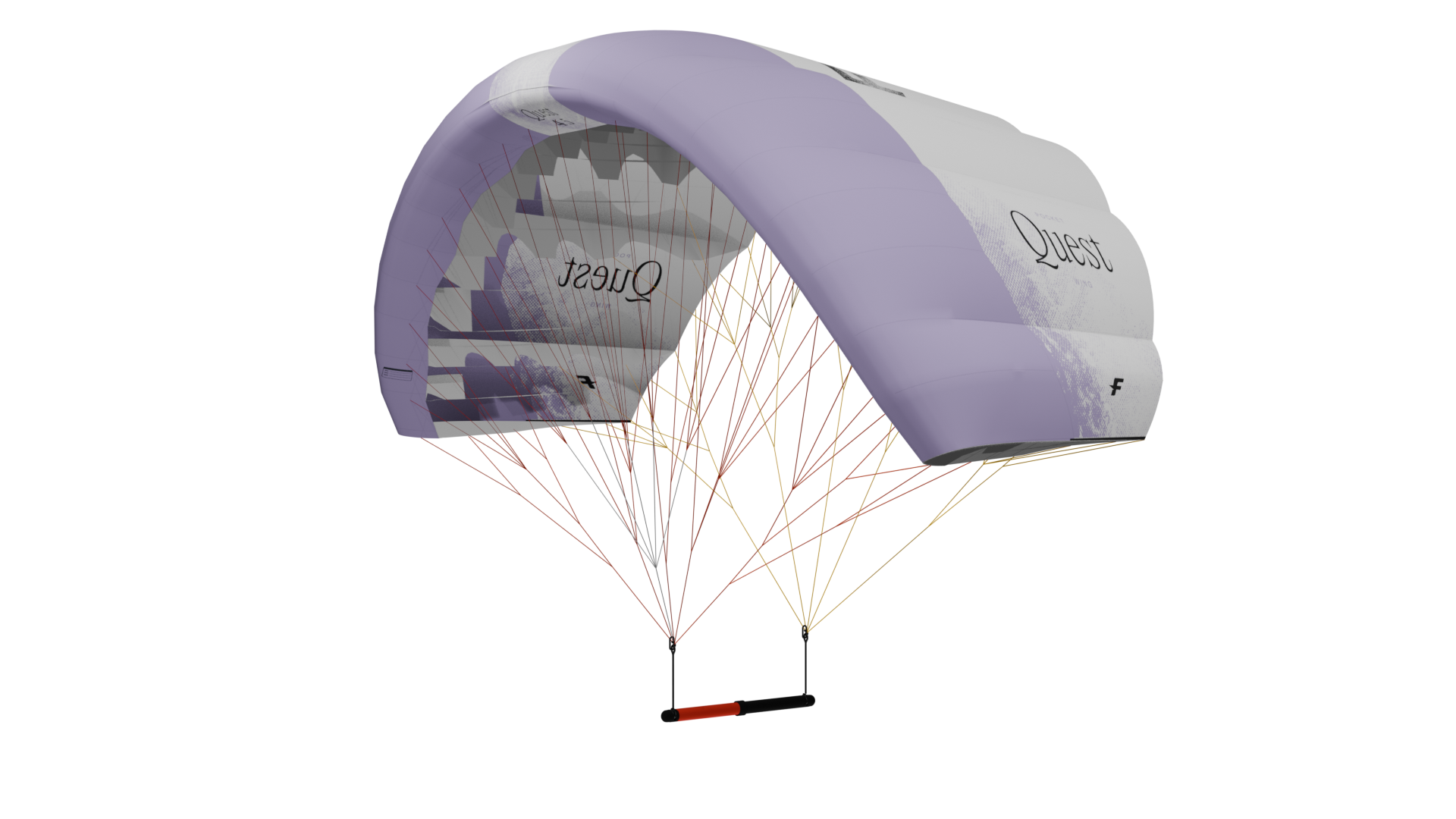
F-One's newest parawing just landed. Progressive, versatile, and designed for foil riding from day one.
Shop Now
Blends kite DNA with parawing design and creates a familiar feel for kiteboarders making the transition to foil. Fewer lines to get tangled and an inflatable leading edge that makes for quick, easy relaunches. The Plume is truly a unique device and has the widest wind range and high end capability of any kite, wing, sail, or parawing we've tried yet.
Shop NowParawinging puts different demands on a board than traditional winging. Boards designed for the discipline are built to handle the power delivery of a parawing — typically flatter rocker, stable at speed, and optimized for the kind of glide-focused riding the sport rewards.
If you're just getting started, most foil boards will work to get you going. But if you're ready to set up a dedicated parawing quiver, we have boards spec'd for the sport.
Beyond the wing and the board, you'll need a few things to get set up properly. A harness or spreader bar is essential — while you can roll without one, it significantly reduces arm and back strain and will make your sessions last longer and be higher quality.
We carry the accessories you need to get on the water, from harnesses to lines to everything in between.
Browse the full lineup or preorder the new North Rover before units land April 21.
Shop All Parawings Preorder the Rover
Leave a comment