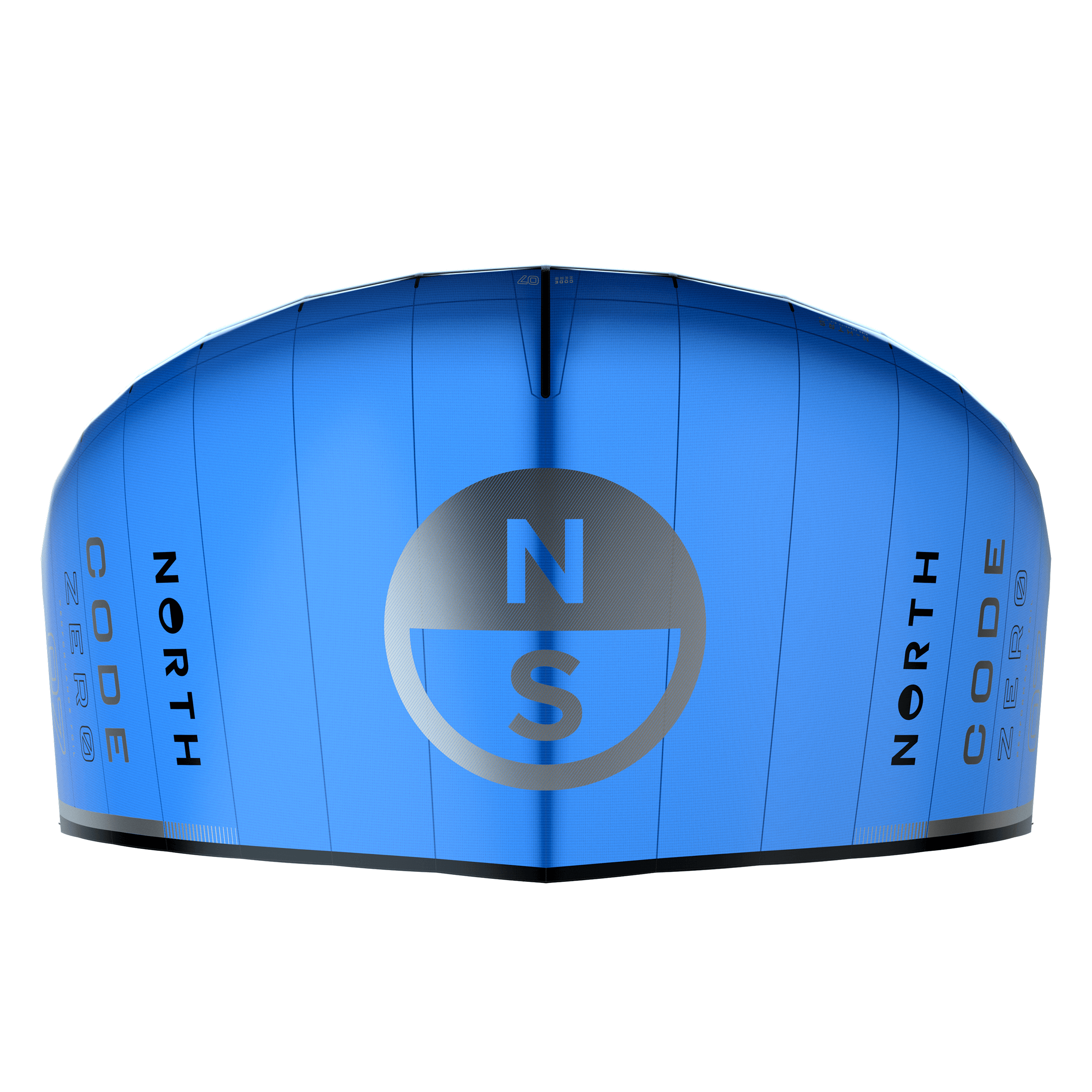
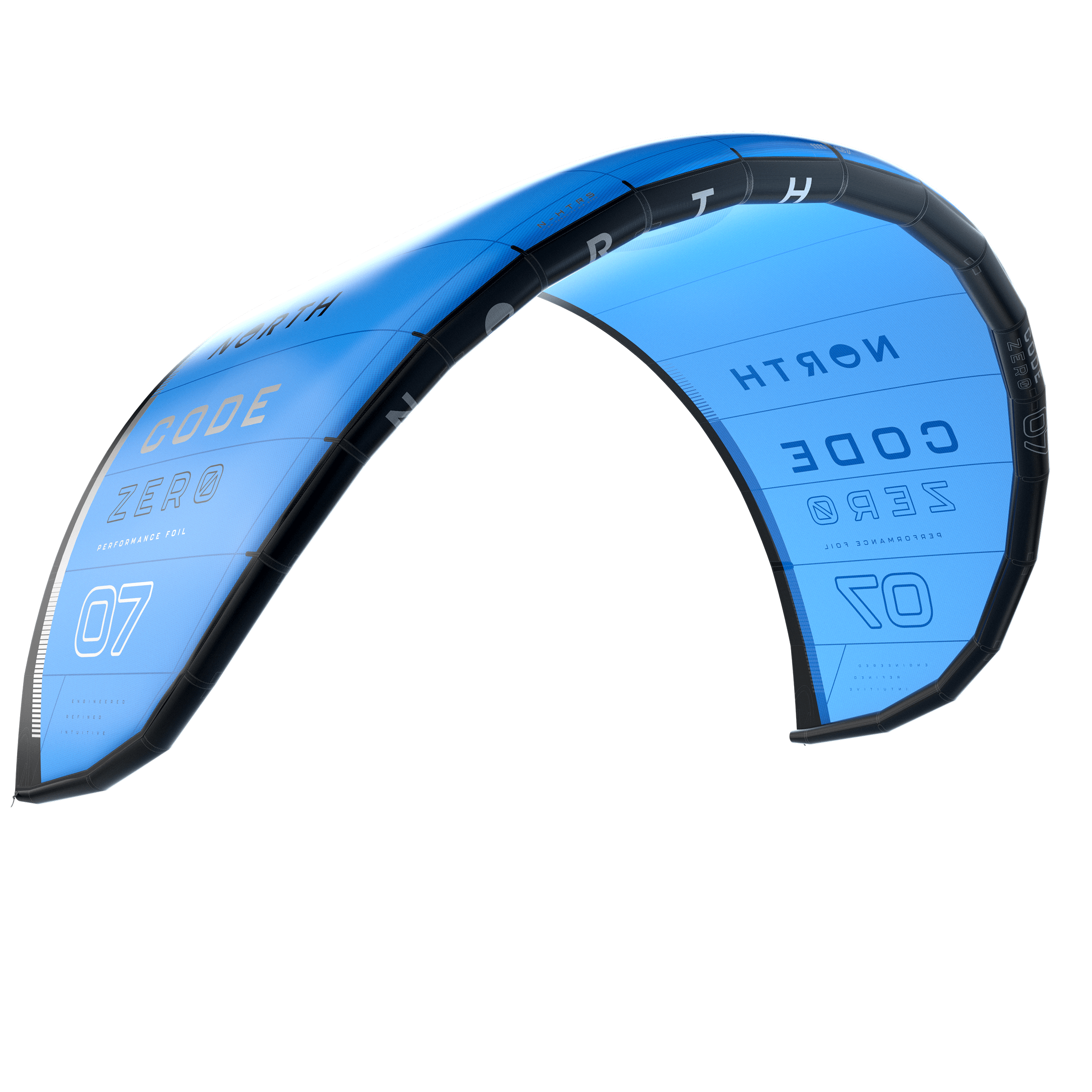
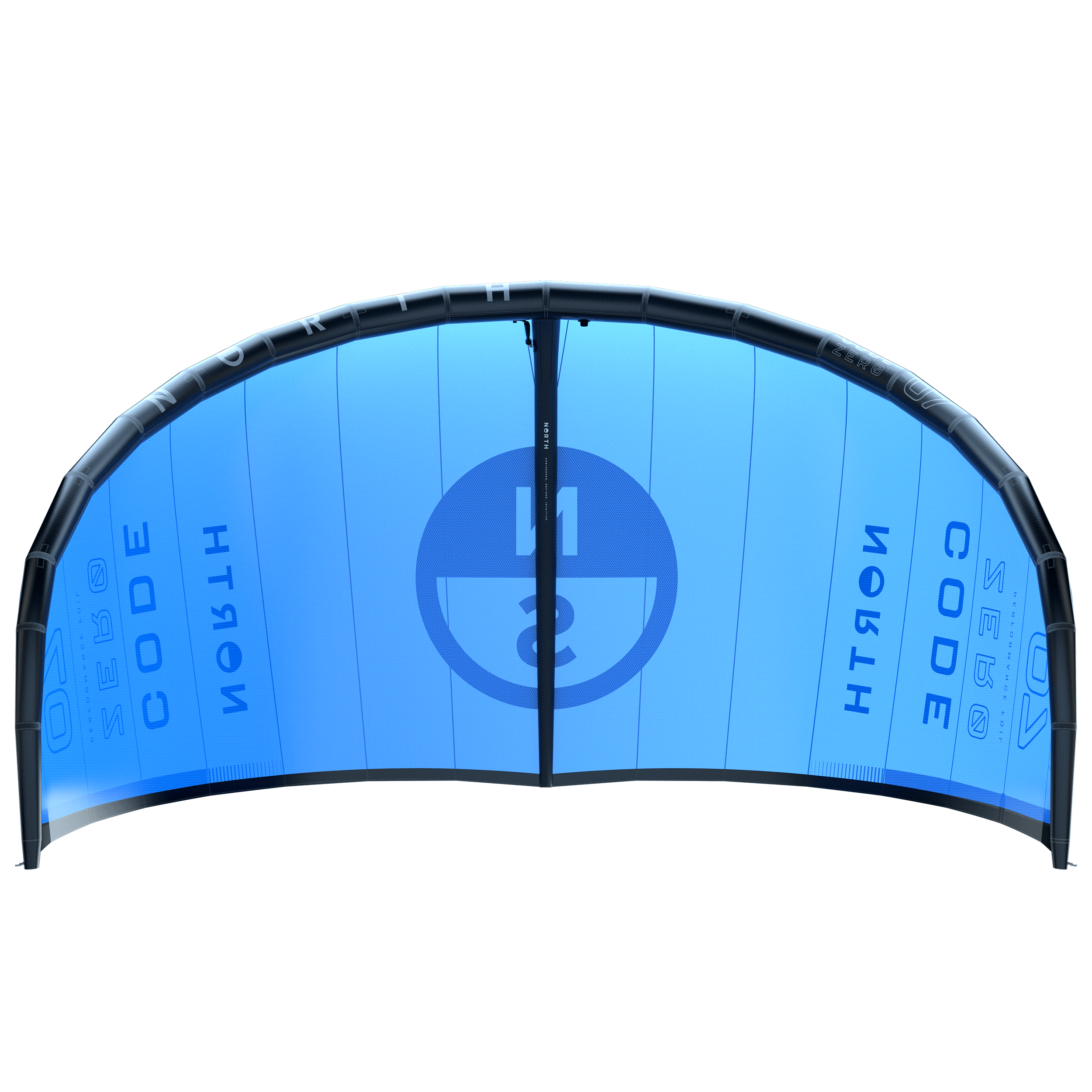
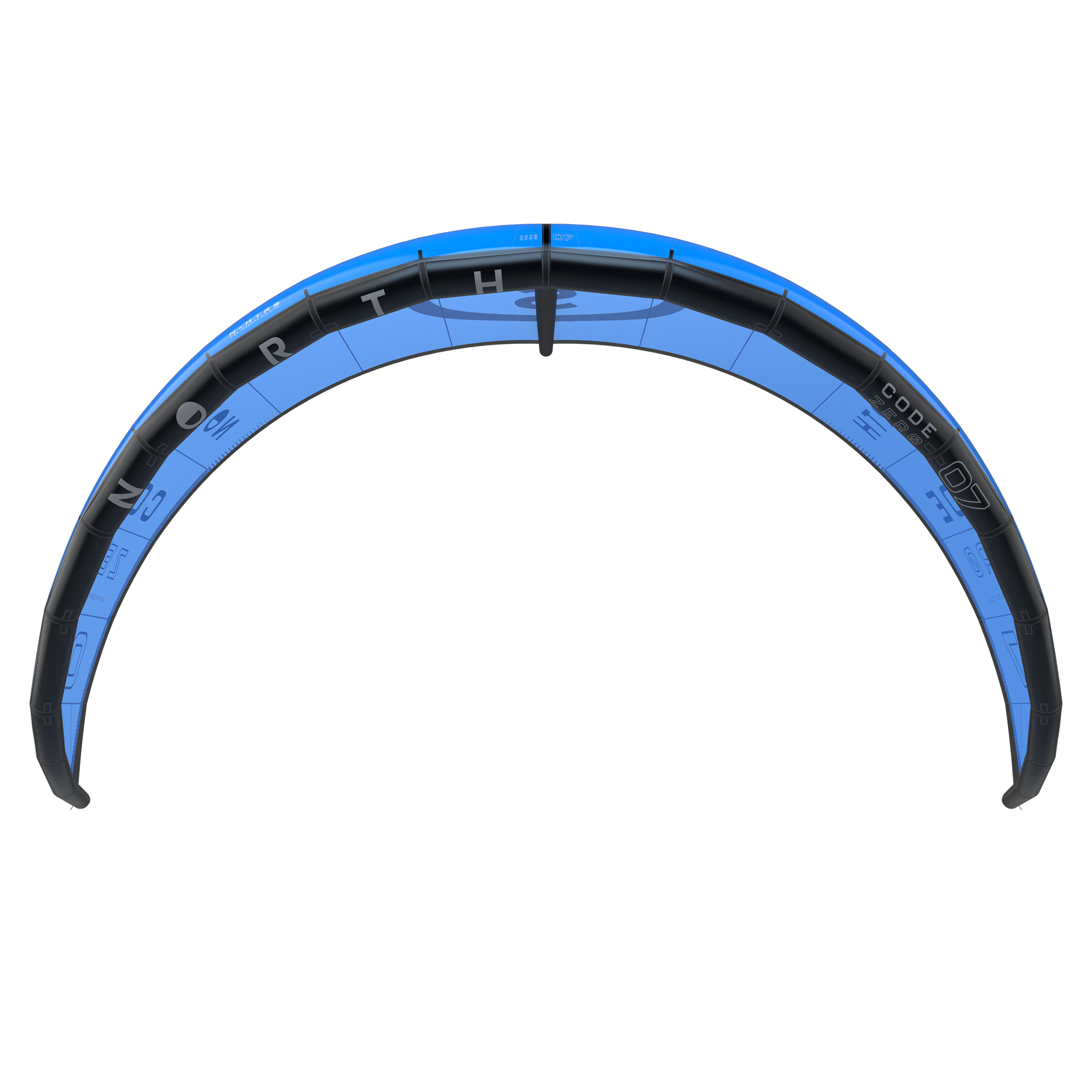
Light-Wind Freeride • Kite Foiling • Small Surf • Single Strut
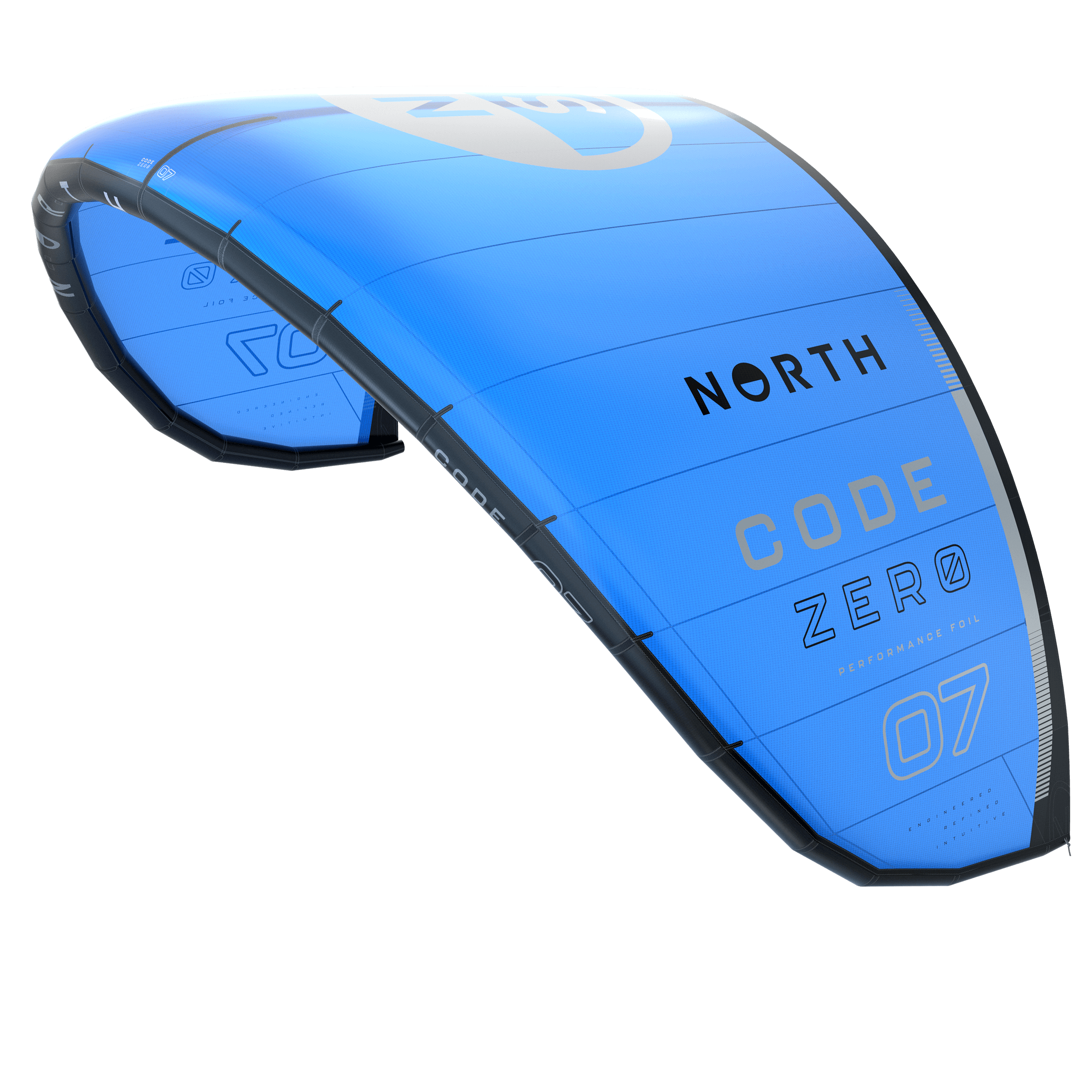
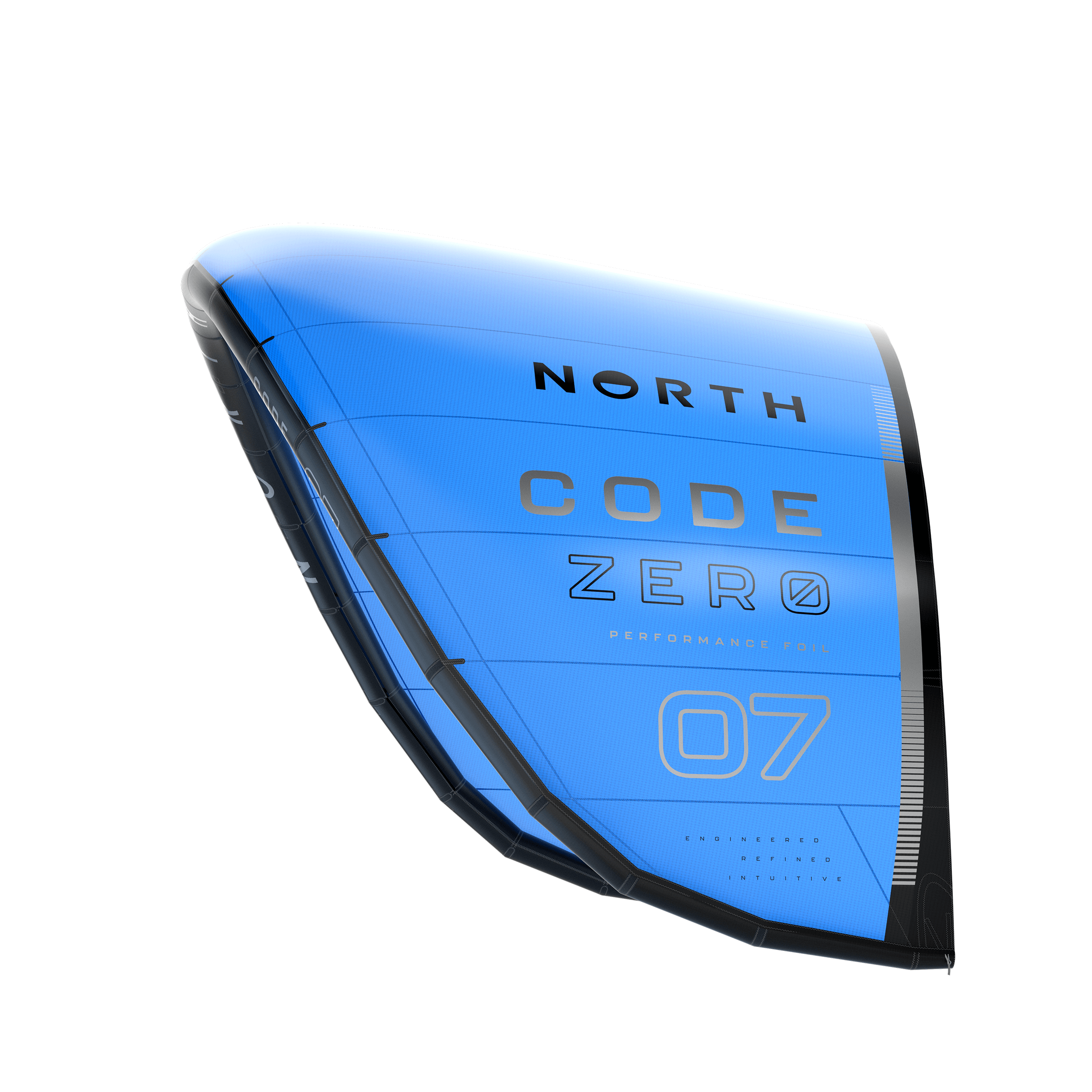
2024 North Code Zero Kiteboarding Kite
A lightweight, fast and reactive single-strut kite for freeride foiling, light-wind sessions and fluid wave riding.
The 2024 North Code Zero is a lightweight performance kite created for riders who want efficient power in light, variable wind without the weight and drag of a conventional three-strut platform. Its single-strut, mid-aspect design combines fast turning, excellent drift and easy one-handed control with enough structure to keep the canopy supported during relaunches and changing conditions.
North updated the 2024 model with a lighter N-Max Dacron airframe, revised bridle geometry, improved wingtip angle of attack and better trailing-edge tension. The result is lighter bar pressure, more direct steering, progressive depower and less canopy flutter than the previous Code Zero.
- Performance Kite Foiling
- Light-Wind Freeride
- One-Strut Airframe
- N-Max Dacron
- Fast, Agile Steering
- Sizes 3–14m
Why Choose This Kite?
Choose the 2024 Code Zero if you want a kite that generates usable power without feeling heavy or slow. It is particularly well suited to kite foiling, where a smaller, faster kite can create power through movement and then drift quietly while you carve, transition or ride downwind.
Compared with the three-strut North Reach, the Code Zero feels lighter, turns more quickly per square meter and stays airborne more easily in marginal wind. Compared with a zero-strut kite, its center strut gives the canopy additional support and makes water relaunch more dependable. Compared with the North Carve, it offers better light-wind efficiency and easier foil-oriented handling, while the Carve provides more structure for powered surf and strapless freestyle.
Windance recommendation: Select the Code Zero if freeride foiling, light-wind cruising and small-wave riding are your priorities. Choose the Reach if you want one kite for twin-tip freeride, jumping, foiling and general progression. Choose the Carve for powered wave riding or strapless freestyle.
Best Uses and Rider Level
Kite Foiling
This is the Code Zero’s strongest discipline. Its fast steering, efficient power generation, excellent drift and one-handed control make freeride foil transitions, carving and downwind riding feel natural.
Light Wind
Lightweight N-Max construction and efficient canopy tensioning help the kite remain airborne in light, shifty conditions. It can produce useful pull from a smaller size by moving quickly through the window.
Wave Riding
Excellent drift and quick redirection make the Code Zero highly capable for small surf, foil waves and lighter-wind directional riding. Choose the Carve for more powered surf, rough water and strapless freestyle.
Beginner Progression
Stable power, light bar pressure and intuitive relaunch can suit supervised light-wind lessons and foil progression. For a first all-condition twin-tip quiver, the three-strut Reach offers more conventional support and versatility.
Freeride
Excellent for foil freeride and relaxed directional riding. It can be used with a twin tip when adequately powered, but its light one-strut structure is optimized for efficiency rather than aggressive loading.
Big Air and Freestyle
Not its main purpose. The Code Zero can jump when powered, but the Reach and Orbit offer greater airframe support, lift, hangtime and confidence under heavy Big Air or freestyle loads.
Foil Racing
Efficient and capable of useful forward speed, but not a dedicated high-aspect race kite. Its focus is accessible freeride foiling, drift and maneuverability rather than maximum course-racing performance.
Travel
The single-strut structure, lightweight bladders and reduced reinforcement allow the kite to pack smaller and lighter than most conventional three- or five-strut kites.
How the Code Zero Rides
Fast, Reactive Turning
Revised bridle attachment points and the lightweight airframe give the Code Zero quick steering initiation. It can be looped efficiently to create apparent wind during foil starts, transitions and lulls.
Light but Informative Bar Feel
Bar pressure is light, yet the kite maintains clear position awareness. This makes one-handed control comfortable without leaving the kite feeling vague or disconnected.
Progressive Depower
The 2024 model has a more progressive bar throw with fewer dead spots. It continues to steer effectively while partially depowered, helping riders manage gusts and foil speed.
Excellent Drift
Low weight and balanced geometry help the kite stay composed when the rider travels toward it. It can sit around 45 degrees and follow downwind without constant steering correction.
Efficient Low-End Power
The Code Zero generates power through speed rather than simply relying on a large canopy. This lets foil riders use a smaller, quicker kite in conditions that might otherwise require a larger conventional model.
Composed Upper Range
Improved wingtip geometry, trailing-edge tension and battens in selected larger sizes reduce flutter and help the kite remain smoother when ridden toward the top of its foil-oriented range.
Turning, Bar Pressure, Depower and Drift
-
Turning speed: Fast and agile, with a reactive steering impulse and enough speed to generate apparent wind through loops.
-
Turning style: Smooth and maneuverable rather than heavily driven. The kite remains responsive with some depower applied.
-
Bar pressure: Light, with clear feedback and good awareness of the kite’s position.
-
Depower: Progressive across the bar throw, with improved control and fewer inactive areas than the previous model.
-
Drift: Excellent. The lightweight single-strut structure follows the rider well through downwind foil and wave angles.
-
Stability: Balanced and predictable, with the center strut helping the canopy retain its shape through lulls and relaunches.
-
Boosting: Capable of recreational jumps when properly powered, but not designed for maximum vertical lift or aggressive kite loops.
-
Hangtime: Moderate compared with a three-strut Reach or five-strut Orbit. Foil efficiency and drift take priority over extended airborne glide.
Relaunch and Reverse Launch
The Code Zero’s curved leading-edge profile reduces the amount of inflated structure resting directly on the water. This helps the kite roll onto a wingtip for a conventional relaunch. Its long center strut also supports the canopy and reduces the tendency for it to collapse or collect water.
North also designed the kite for reverse launching, which can be helpful in light-wind foil conditions when a normal wingtip relaunch is difficult. Relaunch still depends on available wind, line tension, water state and rider technique; the lowest published wind numbers should not be treated as guaranteed relaunch limits.
Foil progression advantage: Compared with a zero-strut kite, the Code Zero’s center strut makes the canopy easier to manage after a crash while adding only a modest amount of weight and drag.
Construction and Technology
Single-Strut Airframe
One long center strut supports the canopy while keeping weight and drag lower than a three-strut freeride or wave kite. It balances light-wind flight with practical water relaunch.
N-Max Dacron
North’s lightweight, low-elongation polyester airframe material creates a crisper response and more direct steering without the price of an exotic composite construction.
N-HTRS Canopy
North’s high-tenacity polyester ripstop canopy is designed for low weight, tear strength, low porosity and dependable long-term performance.
Revised Bridle
Repositioned attachment points give the 2024 kite a more rigid, direct feel while reducing bar pressure and improving steering response and stability.
Refined Wingtip Geometry
North optimized the wingtip angle of attack for more direct control, smoother aerodynamics and better performance across the usable range.
Improved Trailing-Edge Tension
A two-layer canopy trailing edge and revised tensioning reduce flutter while allowing the canopy to twist efficiently during steering.
Lightweight Bladders
Reduced bladder weight makes up an important part of the Code Zero’s overall weight savings, improving drift, turning response and early flight.
DuraLite Protection
Lightweight seam and chafe protectors reinforce high-wear areas without covering the kite in unnecessary material that would reduce its light-wind performance.
Canopy Battens
Small battens in selected larger sizes help stabilize the trailing edge, reduce flutter and keep the canopy composed across the upper part of the wind range.
HyperFlow Inflation
North’s high-volume single-point inflation system uses a large-diameter hose and bayonet-style valve for efficient inflation and deflation.
N-Max vs Standard Dacron, N-Weave and ALUULA
The 2024 Code Zero uses N-Max Dacron in its leading edge and center strut. North describes N-Max as 12% lighter with 21% less elongation than its referenced standard 156g/m² Dacron. Reduced elongation helps the airframe retain its intended shape and transfer steering input more directly.
-
Standard Dacron: Generally heavier and more economical, with dependable durability but more stretch under load.
-
N-Max Dacron: A lighter, lower-elongation polyester woven material used to improve response without changing to an exotic composite.
-
N-Weave45: North’s stiffer and lighter premium woven airframe material used on selected Pro products. The 2024 Code Zero does not use N-Weave45.
-
ALUULA: A separate lightweight composite used by other premium kite ranges. The 2024 Code Zero is not an ALUULA kite.
Material-name correction: Some archived retailer descriptions call the 2024 airframe N-Dure, while one video transcript renders it as “AnMax.” North’s official 2024 launch material identifies the upgraded material as N-Max Dacron.
What Changed for 2024?
-
N-Max airframe: Lighter, lower-elongation Dacron gives the kite a crisper response and more dynamic recovery.
-
Revised bridle: New attachment positioning creates lighter bar pressure, more direct steering and improved stability.
-
Better wingtip angle of attack: Produces a smoother aerodynamic profile and more immediate steering response.
-
Improved trailing-edge tension: Reduces flutter and makes the kite more composed through its upper range.
-
More progressive depower: The bar throw feels more consistent, without pronounced dead spots.
-
Faster steering: Improved reactivity makes foil tacks, downloops and one-handed directional control easier.
-
Expanded size range: North added 6m, 8m and 10m sizes, with the complete range extending from 3m to 14m.
Reviewers sometimes refer to this as the second-generation Code Zero or “V2,” but North’s official product name is simply Code Zero 2024.
Standard Code Zero vs Code Zero Pro
The 2024 kite predates the Code Zero Pro name. It is the standard Code Zero, built with N-Max Dacron and a dyed N-HTRS canopy. The later 2025 Code Zero Pro retains the one-strut concept but introduces N-Max2 and an undyed N-HTRS canopy, along with a refined leading edge, greater wingtip sweep, more depower and updated bridle positioning.
2024 Code Zero
N-Max Dacron, N-HTRS canopy, one strut and nine sizes from 3–14m. A fast, light and efficient foil kite with excellent value, drift and uncomplicated handling.
2025 Code Zero Pro
N-Max2 airframe, undyed N-HTRS canopy, refined leading edge and increased depower. New 3.5m and 4m sizes create more linear small-kite spacing.
Version clarity: “Pro” does not mean ALUULA in this model family. The Code Zero Pro uses North’s updated N-Max2 polyester airframe. There is no Code Zero Ultra, TEC or NXT version; those names belong to other product or brand systems.
North Kite Comparison
| Model |
Airframe |
Struts / Shape |
Riding Character |
Choose It If... |
| Code Zero 2024 |
N-Max Dacron and N-HTRS canopy |
One strut; mid-aspect, open canopy |
Light, fast, efficient and easy to control with excellent drift |
You prioritize kite foiling, light wind and small-wave crossover performance. |
| Code Zero Pro 2025 |
N-Max2 and undyed N-HTRS canopy |
One strut; refined LE and more swept tips |
More depower, smoother steering and updated premium refinement |
You want the later Code Zero evolution and are willing to pay more for its construction and handling updates. |
| Reach 2024 |
N-Max construction |
Three-strut all-around freeride platform |
More supported, versatile and forgiving under load, with better boosting and hangtime |
You want one kite for twin-tip freeride, beginner progression, jumping, surf and occasional foiling. |
| Carve 2024 |
Conventional Dacron and N-HTRS canopy |
Three-strut, lower-aspect surf shape |
Direct pivot turns, powered wave control and strapless freestyle support |
You primarily ride a surfboard and want more structure for powered waves, jumps and strapless tricks. |
Who Should Choose the Code Zero?
Best Match
- Beginner-to-advanced freeride foil riders
- Riders who want light, one-handed steering
- Foilers extending their range into lighter wind
- Directional riders in small or lighter-wind surf
- Travelers wanting a compact inflatable kite
- Schools needing early flight and manageable power
Consider Another Kite If...
- You primarily ride a twin tip in powered conditions
- You want maximum Big Air lift and hangtime
- You are focused on powered freestyle or wakestyle
- You need a race-specific high-aspect foil kite
- You ride aggressive strapless freestyle or heavy surf
- You want a premium composite airframe such as N-Weave45 or ALUULA
Published Foil Wind Range
| Kite Size |
North Foil Wind Range |
Typical Foil Role |
| 3m |
18–30 knots |
Strong-wind foiling and high-wind swell riding |
| 5m |
14–25 knots |
Higher-wind freeride foiling |
| 6m |
12–22 knots |
Medium-to-strong wind foiling |
| 7m |
10–21 knots |
Versatile everyday foil size |
| 8m |
8–19 knots |
Moderate and lighter-wind foiling |
| 9m |
8–18 knots |
Light-wind freeride foiling |
| 10m |
7–17 knots |
Dedicated light-wind foiling |
| 11m |
7–16 knots |
Light-wind foiling for larger riders or less efficient foils |
| 14m |
7–15 knots |
Maximum low-end pull and light-wind cruising |
Important: These are North’s published foil wind ranges. They are not universal twin-tip ranges or guaranteed relaunch limits. Rider weight, foil efficiency, board volume, line length, current, water conditions and skill can substantially change the practical range.
North notes that a hydrofoil rider under 70kg may not need a size larger than 8m, even in very light wind. Heavier riders, larger boards or less efficient foils may benefit from the 9–14m sizes.
Control Bar and Setup
The Code Zero uses a four-line North Navigator control system. The adjustable Navigator bar is offered in three widths, allowing riders to change steering leverage and response:
-
38–43cm: North’s small-bar recommendation for kites below 8m.
-
45–50cm: A versatile medium size recommended for kites below 11m.
-
50–55cm: Provides more steering leverage for larger kites and is recommended for sizes above 8m.
-
Standard line length: Navigator lines are adjustable between 22m and 12m.
-
Short lines: Can make the Code Zero feel faster and reduce the power spike during loops, but also reduce low-end power.
North’s bar recommendations intentionally overlap. Select bar width based on kite size, preferred steering speed and line length rather than treating the chart as a strict compatibility limit.
What’s Included
- 2024 North Code Zero kite
- Recycled PET kite bag with Foil Assist
- Repair kit
Control bar, pump, board, foil, harness and safety equipment are sold separately unless specifically included in a Windance package.
Frequently Asked Questions
Is the 2024 North Code Zero suitable for beginners?
Its stable power, light bar pressure and easy relaunch can work well for supervised light-wind lessons and foil progression. A beginner building a general twin-tip quiver may find the three-strut Reach more conventional and versatile.
Is the Code Zero only for kite foiling?
No. It can also be used for light-wind freeride and small-wave directional riding. Foiling remains its strongest discipline because that is where its low weight, fast turning and drift provide the greatest advantage.
Can the Code Zero jump?
Yes, it can produce recreational lift when adequately powered. Riders prioritizing high boosts, longer hangtime and loaded loops should choose the Reach or Orbit.
Is the Code Zero an ALUULA kite?
No. The 2024 Code Zero uses N-Max Dacron, a lightweight and lower-elongation polyester airframe material. It does not use ALUULA or North’s N-Weave45 material.
What is the difference between Code Zero and Code Zero Pro?
The 2024 Code Zero uses N-Max and a standard N-HTRS canopy. The later Code Zero Pro uses N-Max2, an undyed N-HTRS canopy, refined leading-edge geometry, more depower and updated size spacing.
Should I choose the Code Zero or Reach?
Choose the Code Zero for dedicated foiling, light-wind efficiency, faster turning and better drift. Choose the Reach for broader twin-tip freeride, jumping, beginner progression and all-around versatility.
Should I choose the Code Zero or Carve?
Choose the Code Zero for foil riding and lighter-wind waves. Choose the Carve for powered surf, strapless freestyle, stronger canopy support and a more direct wave-kite feel.